China Top 10 Septic Pumps Suppliers for Global Buyers
China Top 10 Septic Pumps Suppliers for Global Buyers
The global need for reliable sanitation equipment is expanding. The WHO and UNICEF Joint Monitoring Programme reported that 3.5 billion people lacked safely managed sanitation in 2022. That figure gives septic pumps a practical role, especially where centralized sewer networks remain unavailable. The U.S. Environmental Protection Agency estimates that more than 21 million American homes use septic systems. Behind many quiet household systems, a pump moves wastewater through narrow discharge lines, alarms, tanks, and treatment areas.
Performance matters more than a polished catalog. Karen Mancl, Ph.D., an onsite wastewater specialist at Ohio State University, explains, “The soil is part of the treatment system.” Her point is important for buyers. A pump cannot compensate for poor system design, weak controls, or an unsuitable drainfield. This guide examines China’s leading septic pumps suppliers through pump head, flow rate, solids-handling capacity, materials, motor protection, certifications, testing, warranty support, and export experience. Small details matter. A blocked impeller can stop a rural facility during heavy rain.
Industry reports often group septic pumps within broader wastewater equipment markets. That makes precise market-size comparisons difficult. A little caution helps. Supplier rankings should not rely only on shipment volume or website claims. Buyers should request test records, installation references, spare-parts availability, and clear voltage specifications. Some comparisons may remain imperfect because manufacturers publish different performance conditions. Still, this practical review aims to identify dependable Chinese suppliers for distributors, contractors, and international project owners seeking durable septic pumps.
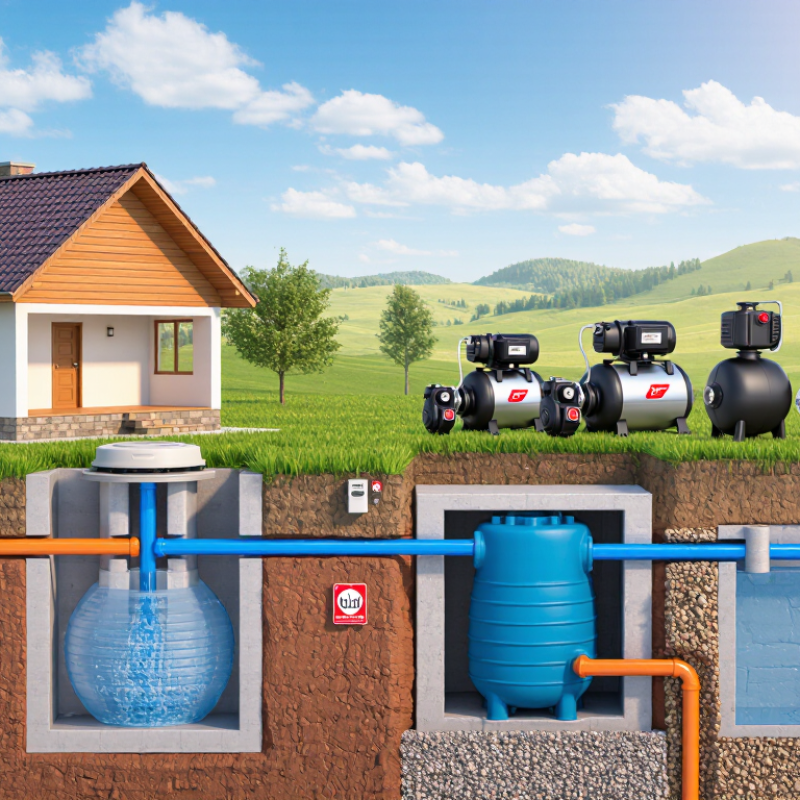
China’s Septic Pump Market: Flow Rates, Head Pressure, and Export Demand
China Top 10 Septic Pumps Suppliers for Global Buyers
China’s septic pump market is shaped by practical hydraulics, not catalogue rankings. Small residential systems commonly specify 3–15 m³/h flow and 10–25 metres of head. However, these figures change with pipe length, lift, bends, and solids content. A pump moving 10 m³/h at 20 metres may consume far more energy than a low-head model. The distinction matters.
China’s 14th Five-Year Plan for Urban Sewage Treatment targets a 95% wastewater treatment rate in cities and 85% in counties by 2025. This policy supports continued demand for drainage, effluent, and sewage-lifting equipment. UN Comtrade’s 2023 data under HS 841381 also places China among the leading pump exporters by trade value. Yet this customs code covers several pump types, not septic pumps alone. Treat the number carefully.
For global buyers comparing the top ten suppliers, verified performance data is more useful than promotional flow rates. Request pump curves, solids-passage diameter, insulation class, and tested head at the required flow. A 50 mm discharge line can behave differently after 30 metres of buried pipe. Field checks should include float-switch reliability and restart performance. Not perfectly. Supplier documents sometimes omit actual working-point tests, so buyers should allow for friction losses and question unusually high efficiency claims.
How the Top 10 Suppliers Compare by 0.75–30 kW Motor Capacity
China Top 10 Septic Pumps Suppliers for Global Buyers
The leading ten suppliers cover motor capacities from 0.75 to 30 kW. This range suits compact household tanks, commercial sites, and municipal lift stations. Units below 3 kW usually serve shallow installations with moderate solids. Capacities from 5.5 to 15 kW handle longer discharge lines and heavier daily loading. The 22–30 kW segment targets large collection systems, where hydraulic efficiency matters more than purchase price.
According to the International Energy Agency, electric motor systems consume about 46% of global electricity. Therefore, buyers should compare motor efficiency, not only pump flow. IEC 60034-30-1 efficiency classes provide a useful reference for motor selection. Technical checks should include impeller clearance, insulation class, thermal protection, and maximum solids passage. A 7.5 kW motor may outperform an 11 kW model when its pump curve matches the site. Bigger is not automatically better. Field experience also shows that cable length can reduce starting performance, especially in wet wells. The comparison is not perfectly uniform, because suppliers publish different test conditions. That weakness deserves attention. Ask for certified curves, duty-point data, and tested efficiency at the intended head. During supplier audits, inspect casting quality, seal arrangements, control panels, and spare-part response times. Price comparisons without these details can mislead global buyers.
Technical Standards: IP68, ISO 9001, CE, and IEC Compliance
China Top 10 Septic Pumps Suppliers for Global Buyers
Technical Standards: IP68, ISO 9001, CE, and IEC Compliance
For global buyers, compliance is more than a logo on a pump nameplate.
IEC 60529 defines IP ratings, while IP68 requires agreed depth and test duration. These conditions are not automatically identical between suppliers.
Ask for the complete test report.
The ISO Survey 2022 recorded more than
1.2 million ISO 9001 certificates worldwide.
This scale shows the value of controlled production, but certification alone cannot prove pump performance. Buyers should verify serial traceability, inspection records, motor insulation, thermal protection, and the published duty curve.
Small details matter.
CE marking indicates conformity with applicable European requirements, not universal product quality. For pump motors, relevant IEC standards should match the actual design and voltage. Request a Declaration of Conformity and check whether it identifies the correct model.
UN-Water reported that 42% of household wastewater was not safely treated in 2022, reinforcing the need for dependable equipment.
Still, a catalogue promise may hide poor solids handling. Field experience suggests testing the pump with realistic debris, not clear water only.
That step is often missed.
Supplier Evaluation Using Flow, Head, Materials, Warranty, and MOQ Data
China Top 10 Septic Pumps Suppliers for Global Buyers
Supplier evaluation should begin with flow and head, not catalogue price. The U.S. EPA reports that about 20% of American households use septic systems, making dependable wastewater pumping essential. For each Chinese supplier, request a duty point in liters per minute and total dynamic head in meters. Compare the published curve with ISO 9906 testing requirements. A pump rated at 30 m³/h may deliver far less at 20 meters.
Materials reveal practical durability. Stainless steel wetted parts resist corrosion, while reinforced thermoplastics can reduce weight and cost. However, material names alone prove little. Ask for compatibility data, shaft seal details, cable protection, and temperature limits. The Hydraulic Institute warns that pumps operating away from their best efficiency point may suffer higher energy use and wear. Small differences become expensive in remote installations.
Warranty terms need measurable boundaries. Check coverage length, excluded parts, response time, and replacement procedures. A two-year warranty sounds useful, but weak technical support can make it inconvenient. MOQ also affects risk. A low minimum order quantity helps trial purchases, yet it may indicate limited customization. My early supplier shortlist focused too heavily on MOQ. That was a mistake. Buyers should also inspect factory test records, sample units, packaging quality, and spare-parts availability. Do not trust every curve. Verify it.
This benchmark summarizes commonly published septic and effluent pump specifications for global procurement.
Values are normalized to a 0–100 reference scale from typical market ranges: flow capacity of 20–200 GPM,
total head of 10–100 ft, one-to-three-year warranty coverage, order quantities of 1–10 units, and
corrosion-resistant cast iron or stainless-steel construction. A higher score indicates stronger specification coverage;
MOQ is scored inversely because a lower minimum order quantity is more suitable for buyers.
Global Buyer Guide to Pricing, Lead Times, Shipping, and After-Sales Support
For global buyers comparing China’s top septic pump suppliers, price is only the opening figure. A proper quotation should separate the pump, motor, control panel, float switch, packaging, and spare parts. Request flow rate, head, solids-handling diameter, power frequency, and test conditions. ISO 9906 provides a useful reference for pump performance testing. Without these details, two “identical” offers may not be comparable.
Lead time commonly depends on motor availability, customization, and factory testing. Ask for a production schedule with inspection dates, not only a promised shipping date. The World Bank’s Logistics Performance Index 2023 shows that customs clearance and shipment timeliness can materially affect delivery reliability. For ocean freight, confirm Incoterms, port charges, export documents, and whether wooden packaging meets destination rules. Small details matter. A missed document can delay a container.
After-sales support deserves equal attention. Suppliers should provide wiring diagrams, installation instructions, fault codes, and a named technical contact. Ask whether replacement seals, impellers, and control components can ship within seven days. The WHO and UNICEF Joint Monitoring Programme reported that 3.5 billion people lacked safely managed sanitation in 2022, showing the continuing need for dependable sanitation equipment. Still, a low purchase price does not prove value. In my view, buyers should score warranty response time, video troubleshooting, and spare-parts availability beside the unit cost. Some evaluation methods remain imperfect. Field conditions often expose assumptions that factory documents miss.