Choosing a septic vacuum pump is not a simple horsepower exercise. The wrong choice can leave thick sludge behind, overheat during long routes, or damage fragile tank components. The U.S. Environmental Protection Agency reports that septic systems serve about 20% of American households, representing more than 60 million people. That scale makes reliable pumping equipment a practical infrastructure concern, not merely a purchasing detail.
Global sanitation data adds wider context. The WHO and UNICEF Joint Monitoring Programme reported that 3.5 billion people lacked safely managed sanitation services in 2022. Vacuum equipment cannot solve that challenge alone, but dependable maintenance supports safer wastewater handling where decentralized systems remain essential. A suitable septic vacuum pump must match viscosity, solids content, suction distance, discharge height, operating temperature, and daily duty cycles. Small details matter. A long hose run can change everything.
This guide compares pump types, flow rates, vacuum levels, materials, maintenance needs, and vehicle compatibility. It also considers diaphragm, rotary vane, liquid ring, and rotary lobe designs. Technicians often prioritize steady vacuum performance over impressive catalogue numbers. That judgment is sensible, though not universal. A pump rated for clear liquids may struggle when grease, grit, wipes, and settled sludge enter the line. Buyers should verify manufacturer test conditions, service support, noise levels, and replacement-part availability. Industry brochures sometimes simplify real work. Tank access, weather, operator habits, and neglected maintenance can alter results. The best septic vacuum pump is therefore the one that performs consistently in the actual service environment, not merely the one with the highest advertised capacity.
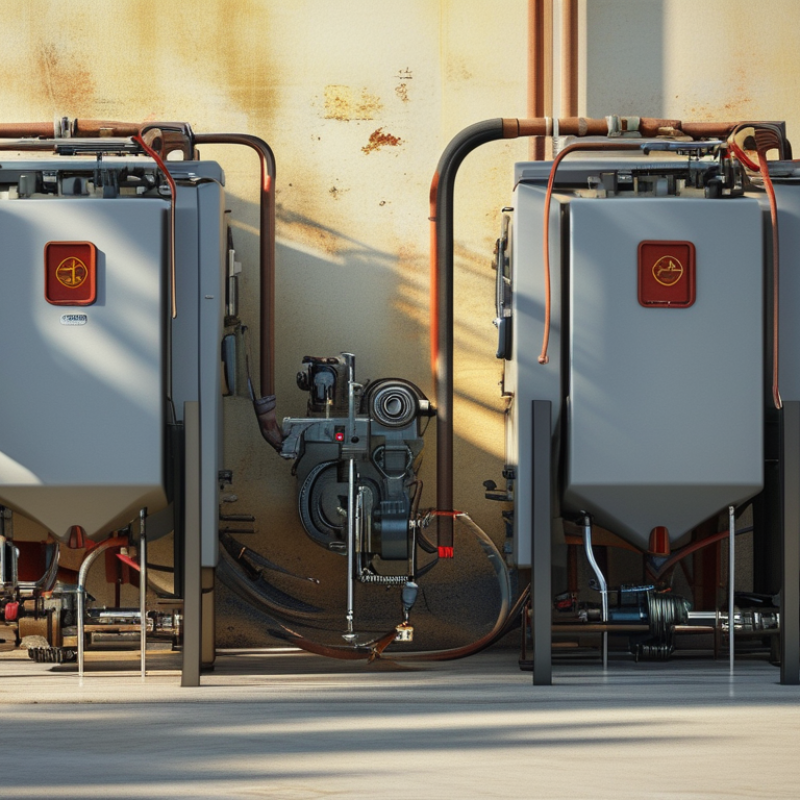
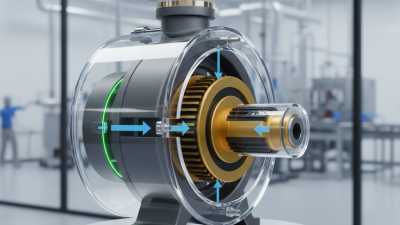
A septic vacuum pump removes wastewater by creating negative pressure inside a sealed tank. Atmospheric pressure then pushes sludge through the suction hose. This is the core operating principle.
The pump does not “pull” waste alone. Pressure differences do the work.
Pump selection should match vacuum level, airflow, solids content, hose length, and duty cycle. Rotary vane pumps can provide strong vacuum performance, while liquid-ring pumps tolerate moisture better. However, every design has trade-offs. A higher vacuum rating does not always mean faster emptying. Hose diameter, bends, and thick sludge may reduce real-world flow.
The U.S. Environmental Protection Agency reports that about 20% of U.S. homes use septic systems, serving more than 60 million people. That scale makes dependable maintenance equipment important.
Tips:
Check the required airflow in cubic feet per minute and the maximum vacuum rating. Confirm the pump can handle wet, abrasive material. Ask about corrosion protection and routine oil servicing.
The U.S. Department of Energy notes that properly maintained pumping systems can reduce energy waste, although actual savings depend on operating conditions.
My practical concern is often overlooked: a pump may perform well during a short test, then struggle during continuous work. Review duty-cycle data, temperature limits, and service access before choosing.
Safety shutoffs matter. So does operator training.
Tank capacity should guide the pump’s working volume, not just its maximum rating. The U.S. EPA reports that over 20% of U.S. households use septic systems. That equals nearly 60 million people requiring dependable service. A small tank may need controlled suction, while a large commercial tank needs higher flow and longer duty cycles. Measure twice. Confirm tank volume, access depth, hose length, and vertical lift before selecting equipment.
Waste type changes the selection. Liquid effluent moves easily, but settled sludge, grease, grit, and fibrous debris demand stronger vacuum performance. Water Environment Federation guidance emphasizes matching equipment to solids concentration, hose design, and operating conditions. A pump with excessive suction can compact sludge inside narrow hoses. That creates blockages and costly cleaning. Field service teams should check the waste profile, expected solids percentage, and disposal distance. It matters.
Pumping requirements also include daily workload, cycle frequency, available power, and noise limits. Choose a pump that can maintain stable performance during repeated loading, rather than relying on peak specifications. EPA onsite wastewater guidance supports regular inspection and scheduled pumping, but actual intervals vary with household size and solids accumulation. A common mistake is selecting capacity from tank size alone. I would also record suction time, hose failures, and motor temperature after each job. Those notes may reveal that the first choice was adequate, or simply convenient.
Choosing a septic vacuum pump starts with the waste, not the catalogue. Sludge, grit, and foaming liquids punish poorly matched equipment. Rotary vane pumps provide strong vacuum and compact installation. Liquid-ring pumps tolerate moisture better, but require clean water management. Positive-displacement blowers move air quickly, although they may deliver less ultimate vacuum.
The U.S. Environmental Protection Agency reports that nearly 20% of American households use septic systems. That scale makes dependable service equipment important.
Power sources change operating costs and field flexibility. A diesel-driven pump suits remote sites and long collection routes. An electric pump runs more quietly and can reduce local emissions, but needs reliable site power. The U.S. Department of Energy reports that properly sized pump systems can achieve substantial energy savings, sometimes exceeding 20%. Oversizing still wastes fuel and increases wear. It is an easy mistake.
Vacuum performance needs practical testing. Compare airflow, maximum vacuum, recovery speed, and continuous-duty ratings. A pump reaching 27 inches of mercury may still recover slowly through a narrow, clogged hose. Watch the gauge while loading.
The Hydraulic Institute emphasizes system-level pump selection, not isolated nameplate figures. That matters in real work. Hose length, tank volume, valves, and liquid temperature all affect results. I would also inspect condensate drains and filters after every shift. They are small details, but neglecting them can distort performance readings and shorten pump life.
Choosing a septic vacuum pump starts with the hose, not the motor. EPA estimates that about 20% of U.S. households use septic systems, while 10–20% malfunction annually. That scale makes reliable fluid handling important. Select hoses rated for vacuum service, abrasion, and sewage chemicals. Match their inside diameter to the pump inlet. A narrow hose can restrict flow and increase loading. Check bend radius, couplings, and collapse resistance before purchase. Small mismatches cause large delays.
Filters should protect the pump without choking suction. Use a cleanable pre-filter and confirm its flow rating at the intended vacuum level. Valve materials must tolerate moisture, solids, and repeated cycling. Include a shutoff valve near the tank connection and a non-return valve to limit backflow. A transparent section helps operators spot blockage, although it can crack if poorly protected. I would not trust a filter based only on its advertised mesh size.
Safety features deserve equal attention. OSHA’s permit-required confined-space guidance reinforces atmospheric testing, ventilation, and emergency planning around tanks and pits. Choose automatic overfill protection, a pressure-relief device, an emergency stop, and secure hose-locking points. Grounding and bonding can reduce static risks during operation. The U.S. EPA’s Septic Systems Overview also emphasizes regular inspection and maintenance. Field conditions are rarely perfect. Mud, frozen fittings, and worn seals can defeat a carefully selected pump. Build inspection time into every job.
Larger hose diameters provide greater theoretical flow area and can reduce restriction when the pump, filters, valves, and fittings have matching clear openings. Select components that are compatible with the hose size and rated for vacuum service.
The values show the theoretical internal cross-sectional area of common hose inside diameters, calculated as π × diameter² ÷ 4. Actual pump performance also depends on hose length, material, lift height, filter loading, valve openings, bends, and air leakage.
How to Choose a Septic Vacuum Pump?
Maintenance, regulations, and lifetime costs matter more than initial purchase price. The U.S. EPA reports that more than one-fifth of American households use septic systems. That scale makes reliable servicing essential. Choose a pump with accessible filters, clear oil-level checks, and replaceable wear components. A blocked intake can turn a routine collection into an expensive roadside repair. Keep records.
Regulations differ by location. Local authorities may control waste transport, discharge points, noise, emissions, and operator training. The EPA recommends septic inspections about every three years and tank pumping every three to five years, depending on use. These intervals help estimate annual workload, but they are not universal rules. Confirm local requirements before selecting capacity or hose fittings. Oversizing can increase fuel use and maintenance stress.
Total operating cost includes energy, labor, oil, filters, repairs, downtime, and compliant waste disposal. The U.S. Department of Energy’s pump-system guidance supports life-cycle costing instead of comparing purchase prices alone. Calculate hourly energy use, then multiply it by expected service hours and local energy rates. Add technician time and an allowance for unplanned repairs. A quieter pump may also reduce site restrictions and worker fatigue. Small details matter.
A useful comparison is imperfect. Real workloads change with sludge density, weather, and route distance. Review twelve months of service records when possible. If records are missing, measure actual vacuum time for several jobs before committing.
| Evaluation Dimension | Rotary Vane Vacuum Pump | Liquid-Ring Vacuum Pump | Rotary Lobe Vacuum Blower | Selection Implication |
|---|---|---|---|---|
| Typical operating vacuum | Approximately 20–27 inHg, depending on design and operating conditions | Approximately 20–28 inHg; performance depends on seal-water temperature and quality | Often approximately 15–27 inHg in vacuum-service applications | Confirm the required vacuum at the hose inlet, not only the pump’s maximum rating. |
| Common flow range for mobile service equipment | Approximately 150–600 cubic feet per minute (CFM) | Approximately 200–800 CFM | Approximately 300–1,200 CFM | Higher CFM can shorten loading time, but may increase engine power, noise, and operating cost. |
| Resistance to liquid carryover | Moderate; requires an effective liquid separator and shutdown protection | Good, because liquid is part of the operating principle; contamination still requires control | Moderate to good with proper separators; liquid entry can damage lobes and bearings | A correctly sized separator, float shutoff, and inlet filter are essential for septic applications. |
| Routine maintenance workload | Medium to high; oil, vanes, seals, filters, and lubrication system require inspection | Medium; seal-water system, bearings, mechanical seals, and corrosion protection require attention | Low to medium; lubrication, timing gears, belts or couplings, and inlet filtration require inspection | Choose the design that matches the operator’s maintenance skills and service availability. |
| Typical inspection interval | Daily visual checks; oil and filter checks commonly every 50–250 operating hours, subject to the manual | Daily seal-water checks; oil, seal, and bearing inspections commonly every 250–1,000 hours | Daily checks; lubricant and drive inspections commonly every 250–1,000 hours | The manufacturer’s service schedule and actual duty cycle take precedence over generic intervals. |
| Sensitivity to corrosive or abrasive waste | Moderate to high; contaminated oil can accelerate vane, rotor, and seal wear | Moderate; seal water and wetted materials must be suitable for the waste chemistry | Moderate; abrasive solids can damage lobes, clearances, and bearings | Use a separator, strainer, corrosion-resistant materials, and a documented waste-acceptance procedure. |
| Noise and vibration considerations | Moderate; mufflers, flexible connections, and proper mounting are recommended | Moderate; water and rotating equipment may create continuous operating noise | Moderate to high pulsation and noise unless fitted with suitable silencers | Check local noise limits and provide guards, isolation mounts, and safe exhaust routing. |
| Best fit by duty cycle | Intermittent to moderate-duty pumping where compact size and high vacuum are priorities | Frequent duty where liquid tolerance and steady vacuum are important | High-throughput work where fast loading and continuous operation justify the equipment size | Match pump capacity to daily stops, hose length, lift height, material density, and tank volume. |
| Approximate equipment cost, excluding truck | US$4,000–US$15,000 | US$8,000–US$25,000 | US$10,000–US$35,000 | Actual pricing varies with capacity, controls, separator package, materials, and installation requirements. |
| Estimated annual maintenance allowance | Approximately 5–12% of pump purchase price | Approximately 4–10% of pump purchase price | Approximately 3–8% of pump purchase price | Budget for scheduled parts, labor, lubrication, seals, filters, and unexpected repairs. |
| Energy or fuel impact | Often moderate; power demand rises sharply as vacuum and flow increase | Moderate to high; includes pump power and seal-water handling | Moderate to high at high flow rates; efficiency depends strongly on system resistance | Compare cost per completed load, not only motor horsepower or rated CFM. |
| Required protective equipment | Liquid separator, float shutoff, inlet filter, pressure/vacuum relief, and exhaust filtration where needed | Liquid separator, level control, seal-water monitoring, relief protection, and corrosion control | Liquid separator, float shutoff, inlet filter, relief valve, and pulsation or exhaust silencer | Protective devices reduce pump damage, uncontrolled emissions, and worker exposure. |
| Compliance Area | What to Verify Before Purchase | Why It Affects Pump Selection |
|---|---|---|
| Septic waste transport and disposal | Confirm local or regional licensing, manifest, hauling, discharge, and approved disposal-site requirements. | The pump and tank system must prevent spills and support documented, controlled transfer of waste. |
| Worker health and safety | Provide confined-space procedures, biological-exposure controls, PPE, lockout/tagout, and hose-handling procedures. | Septic gases may include hydrogen sulfide and methane; equipment must support safe isolation and ventilation practices. |
| Vehicle and engine emissions | Check applicable engine-emission, idling, exhaust-routing, and inspection rules for the operating jurisdiction. | Engine power, exhaust configuration, and operating location can affect permitting and total operating cost. |
| Noise and community restrictions | Review municipal noise limits, working-hour restrictions, and requirements near residences or sensitive sites. | Silencers, enclosure design, lower-speed operation, or a different pump type may be necessary. |
| Electrical and mechanical safety | Verify guarding, emergency stops, pressure relief, electrical classification, grounding, and installation standards. | Controls and protective devices must be suitable for a wet, corrosive, and potentially hazardous work environment. |
| Cost Component | Planning Method | Illustrative Five-Year Range | Cost-Control Measure |
|---|---|---|---|
| Initial pump and protection package | Pump, separator, valves, relief devices, controls, installation, and commissioning | US$8,000–US$40,000 | Avoid oversizing; select capacity based on actual hose length, lift, and daily workload. |
| Scheduled maintenance and parts | Planned service, filters, oil, seals, vanes, bearings, belts, and seal-water components | US$2,000–US$20,000 | Use preventive maintenance records and replace contamination-control components on schedule. |
| Fuel or electricity | Operating hours × average power or fuel consumption × local energy price | US$5,000–US$35,000 | Reduce unloading time, prevent air leaks, clean filters, and operate near the efficient duty range. |
| Downtime and emergency repairs | Expected lost working hours plus emergency labor, parts, towing, and substitute equipment | US$2,500–US$25,000 | Keep critical spares, monitor vacuum performance, and use high-level shutdown protection. |
| Compliance, training, and inspection | Permits, inspections, operator training, PPE, safety audits, and disposal documentation | US$1,500–US$15,000 | Confirm requirements with the relevant local authority before finalizing equipment specifications. |
| Estimated five-year total | Initial cost + maintenance + energy or fuel + downtime + compliance costs | Approximately US$19,000–US$135,000 | Compare cost per completed load and expected uptime instead of purchase price alone. |