231-941-0215 sale@namkeenmachine.com 2707 Aero Park Drive Traverse City, MI
Eng
  • Eng
  • Deu
  • Fra

How to Choose the Right Lightning Arrestor?

Choosing the right Lightning Arrestor is a reliability decision, not a simple product comparison. A rooftop unit may face direct strikes, while a transformer may experience repeated surge currents through connected cables. These conditions demand different protection strategies. The wrong device can fail silently, leaving equipment exposed during the next storm.

Lightning is extremely energetic. The U.S. National Oceanic and Atmospheric Administration’s National Severe Storms Laboratory reports that a lightning channel can reach about 50,000°F, roughly five times hotter than the Sun’s surface. That figure explains why arrestor selection requires more than checking voltage alone. Engineers should examine system voltage, grounding quality, impulse current, energy capability, response characteristics, and installation location. Small details matter.

Standards provide a stronger foundation. IEEE Standard C62.11 defines performance requirements for metal-oxide surge arresters, while IEC 60099-4 addresses metal-oxide surge arresters without gaps for alternating-current systems. Vaisala’s Annual Lightning Report also demonstrates the value of measured lightning data when assessing regional exposure and storm frequency. These sources offer authority, but they cannot replace site experience. Soil resistance may vary across one facility. Cable length can also change the surge path.

A careful choice balances protection, coordination, maintenance, and cost. It should match the equipment’s insulation level and temporary overvoltage conditions. It should also tolerate the local environment, including heat, moisture, pollution, and altitude. No guide removes every uncertainty. That is worth admitting. A technically impressive arrestor can still underperform if grounding is poor or installation practices are careless. The best selection process combines recognized standards, verified test data, field inspection, and a clear understanding of how lightning actually enters the system.
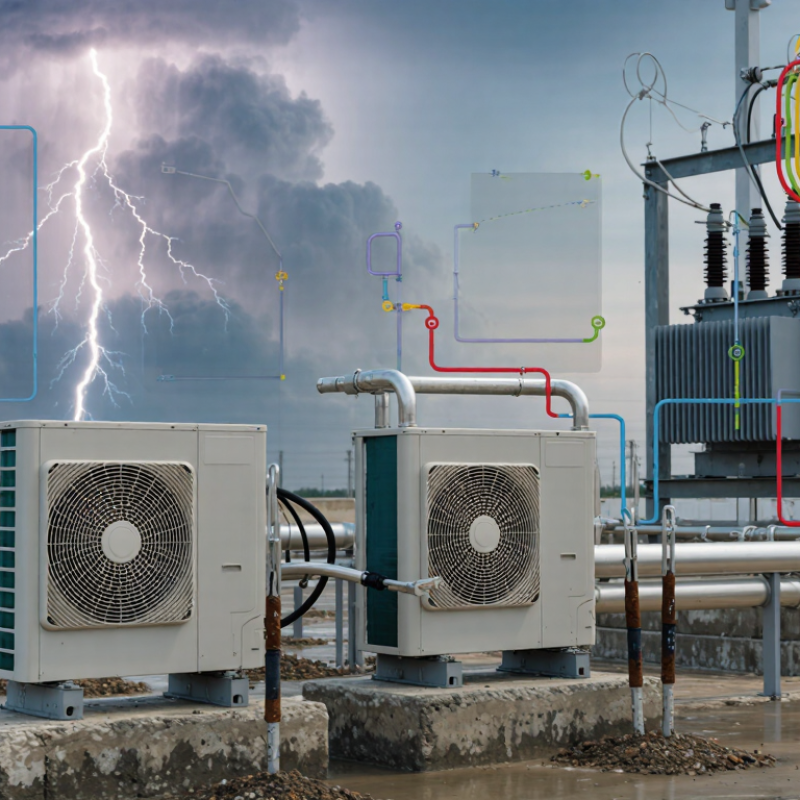
How to Choose the Right Lightning Arrestor?

Understanding the Role of a Lightning Arrestor

Choosing the right lightning arrestor begins with understanding its role. It is not a magical shield. It provides a controlled path for surge energy to reach earth. During a nearby strike, voltage can rise sharply on power, control, or communication lines. The arrestor limits this rise before insulation and sensitive equipment suffer damage. Its performance depends on grounding, bonding, and installation distance. A high-quality device cannot correct a weak earth connection. That detail is often underestimated.

Selection should match system voltage, temporary overvoltage exposure, discharge capacity, and response behavior. Review the equipment’s insulation level and the site’s lightning exposure. A rooftop array, factory panel, and rural pump may need different protection. In practice, technicians inspect conductor length, enclosure condition, and signs of heat or moisture. These details matter. Simple installation errors can undermine otherwise suitable protection. No choice is perfect without site measurements and maintenance records. Rechecking assumptions is worthwhile.

Tips: Keep leads short and straight. Use proper conductor sizes. Bond metal structures to the same grounding system. Check the arrestor after major storms. Replace it when its indicator changes or damage appears. Follow recognized electrical standards and technical data. Ask a qualified professional to verify coordination with upstream protection. A device may look intact while its internal components are exhausted. That possibility deserves attention.

Identifying Your System’s Voltage and Grounding Requirements

How to Choose the Right Lightning Arrestor?

Identifying Your System’s Voltage and Grounding Requirements

Selecting a lightning arrestor starts with accurate system data, not appearance or price. Record the nominal system voltage, frequency, phase arrangement, and maximum continuous operating voltage. Measure it carefully. A device rated too low may fail during normal operation. One rated too high may provide weak protection.

Grounding configuration is equally important. Identify whether the installation uses TN, TT, or IT grounding. Check the relationship between neutral and earth conductors. In a TT system, for example, the arrestor may require different connection and coordination practices than in a TN system. Grounding is not optional. A short, straight connection to the grounding bar usually reduces unwanted inductive voltage. Long loops can make a suitable device perform poorly.

Review the manufacturer’s technical data and applicable electrical standards, such as IEC 61643-11 where relevant. Confirm the device’s discharge current rating, protection level, backup protection, and enclosure requirements. Also inspect the actual panel before choosing a model. Cable size, available space, moisture, and bonding conditions often change the decision. Do not guess. A common mistake is selecting an arrestor from the service voltage alone, while ignoring temporary overvoltage and grounding behavior. That shortcut may appear reasonable, but it deserves reconsideration. Have a qualified electrical professional verify measurements, coordination, and local code compliance before installation.

Comparing Lightning Arrestor Types and Protection Levels

How to Choose the Right Lightning Arrestor?

Comparing lightning arrestor types starts with the installation point. A rod-gap arrestor is simple and economical, but its response can vary with moisture, contamination, and electrode spacing. Expulsion types handle certain distribution applications, yet they may release hot gases during operation. Metal-oxide arrestors respond quickly and provide more predictable voltage limitation. They are widely used near transformers, switchgear, and sensitive electrical equipment.

Protection levels matter as much as arrestor type. Type 1 devices manage high-energy lightning currents at service entrances. Type 2 devices reduce residual surges inside distribution panels. Type 3 devices protect individual equipment, such as control units or network hardware. Layered protection works better than relying on one device. Check the maximum continuous operating voltage, nominal discharge current, short-circuit rating, and voltage protection level. A device with a low protection voltage may still fail if its operating voltage is mismatched.

Look closely.

During site inspections, cable length often weakens good protection. A long connection adds inductive voltage during a surge. Keep conductors short, straight, and properly bonded to the grounding system. I once underestimated this detail in a small control cabinet. The arrestor was correctly selected, but the wiring reduced its effectiveness. Soil conditions, building height, exposed metalwork, and local lightning density also influence the choice. Certification to applicable electrical standards should be verified before installation.

Checking Installation Conditions and Safety Standards

How to Choose the Right Lightning Arrestor?

Checking installation conditions and safety standards should come before comparing voltage ratings. A lightning arrestor must match the system voltage, grounding method, insulation level, and expected fault current. IEC 62305 requires a risk-based approach that considers structure use, exposure, and possible consequences. The 2023 Vaisala Annual Lightning Report recorded about 1.39 billion lightning events worldwide. That figure shows why local weather history matters.

Inspect the mounting point carefully. Keep connecting leads short, straight, and visibly supported. Sharp bends can increase impedance during a surge. Confirm that the grounding conductor reaches a verified earth system, not merely a nearby metal frame. NFPA 780 provides practical requirements for bonding, grounding, and separation distances. UL 1449 also defines performance tests for surge protective devices, including abnormal overvoltage conditions.

Check the details twice.

A suitable arrestor can fail if installation workmanship is poor. Measure continuity, inspect corrosion, and document conductor sizes before energizing equipment. In wet or coastal locations, enclosure protection and terminal materials deserve extra attention. The World Meteorological Organization reports that lightning kills or injures thousands of people globally each year, although reporting remains incomplete. This uncertainty matters. A design based only on average lightning frequency may underestimate actual risk. I have seen tidy installations that still lacked bonding between separate metal services. That mistake is easy to miss and difficult to justify after damage occurs.

Selecting the Right Lightning Arrestor for Long-Term Reliability

How to Choose the Right Lightning Arrestor?
Selecting the Right Lightning Arrestor for Long-Term Reliability
Long-term reliability begins with the electrical system, not the product label. Confirm the system voltage, frequency, grounding method, and maximum continuous operating voltage. An arrester rated too low may fail during normal operation. One rated too high may respond too slowly. Check the expected surge current and exposure level around the installation.
Installation details matter just as much. Keep connecting leads short, straight, and firmly terminated. Long bends add inductance and reduce protection performance during a fast surge. Connect the arrester to a low-impedance grounding network. Inspect bonding points, enclosure seals, and cable insulation before energizing the system. Small weaknesses become expensive failures.
Field inspections often reveal a practical problem: the arrester was correctly selected but poorly maintained. Dust, moisture, corrosion, and loose terminals can quietly reduce service life. Use equipment suitable for the site environment and coordinate it with upstream protection. Follow applicable technical standards and the manufacturer’s test guidance. A visual indicator helps, but it cannot replace periodic inspection or thermal monitoring where risk justifies it.
No selection is perfect. Risk changes over time. New cables, building extensions, or altered grounding can change surge behavior. Reassess the protection after major electrical modifications. A reliable arrester is not simply installed and forgotten; it is checked, documented, and questioned when conditions change.