Demand for reliable distribution equipment is rising as renewable generation, data centers, and urban electrification expand worldwide. The International Energy Agency’s Electricity Grids and Secure Energy Transitions report estimates that annual grid investment must increase from about $600 billion to more than $1 trillion by 2030. This expansion creates stronger demand for compact, low-maintenance dry-type equipment, including the Epoxy Resin Transformer.
Epoxy resin insulation offers valuable protection in indoor substations, hospitals, factories, tunnels, and high-rise buildings. It avoids liquid insulation, reduces fire concerns, and performs well in dusty or humid environments when properly designed. However, resin quality alone does not determine product reliability. Engineers must examine thermal performance, partial-discharge control, noise levels, overload capability, and factory testing.
IEC 60076-11 provides an important reference for dry-type transformer design and testing. Industry research from MarketsandMarkets also identifies grid modernization and renewable integration as major transformer market drivers. These sources provide useful context, but they do not create a universal manufacturer ranking. No ranking is perfect.
A credible comparison should therefore consider proven installations, certification records, production capacity, engineering support, warranty terms, and after-sales service. A transformer may look impressive in a catalogue yet perform differently under coastal salt, heavy harmonics, or frequent load changes. That distinction matters.
This guide reviews leading Epoxy Resin Transformer manufacturers worldwide through practical and technical criteria. It focuses on companies with visible manufacturing capabilities, documented quality systems, and experience across demanding applications. Some market information remains difficult to verify, especially for private manufacturers. Readers should confirm current certifications, test reports, and project references before making a purchasing decision.
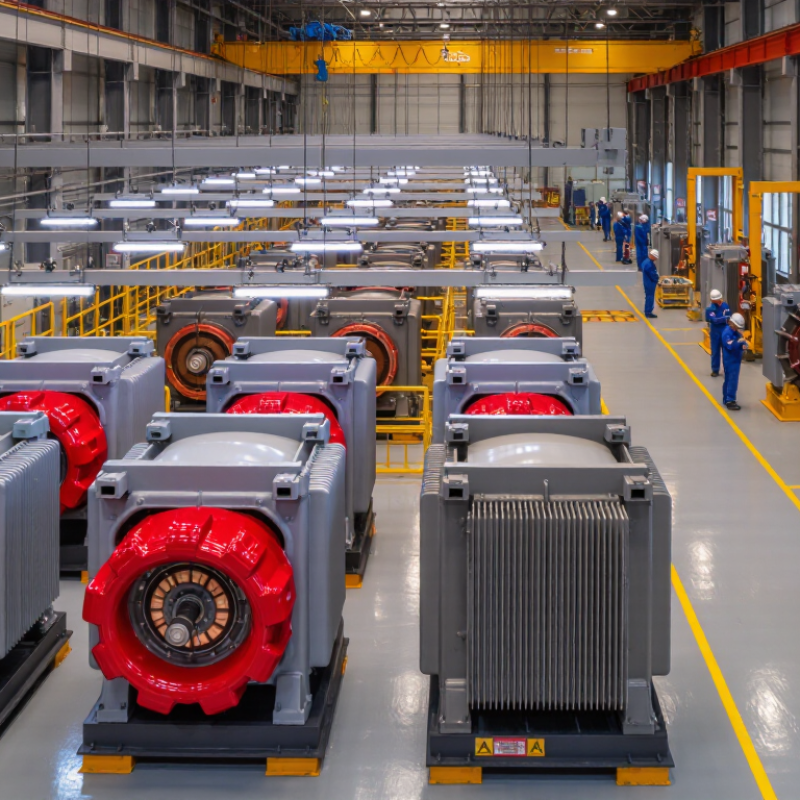
An epoxy resin transformer is a dry-type transformer with windings sealed in solid resin. It uses air for cooling, not mineral oil. The resin protects copper conductors from moisture, dust, vibration, and partial discharge. Under IEC 60076-11, dry-type transformers are assessed for insulation, temperature rise, fire behavior, and environmental conditions. This matters in hospitals, underground stations, factories, and tall buildings.
The casting process is precise. Resin must fill small gaps without trapping air. Poor curing can create cracks or weaken insulation. In service, a 10–20°C rise in operating temperature can accelerate insulation aging, although the exact effect depends on the insulation system and loading pattern.
The U.S. Department of Energy’s 2024 distribution-transformer analysis projects 3.6 quadrillion Btu of energy savings over 30 years from updated efficiency standards. Losses are not dramatic at one unit, but they accumulate across thousands of transformers.
Tips: Check rated power, voltage, impedance, cooling method, noise limits, and installation altitude. Ask for routine-test records, thermal calculations, and resin quality controls. A manufacturer may quote impressive efficiency, but performance at partial load deserves equal attention. This is often overlooked. Also, “maintenance-free” is an imperfect phrase; terminals, ventilation paths, and connections still require inspection.
Evaluating an epoxy resin transformer manufacturer requires more than comparing prices. Study its engineering records, production controls, and tested project experience. A reliable supplier should explain its design assumptions clearly. Ask about voltage class, load profile, cooling method, installation altitude, and ambient temperature. These details affect insulation performance and service life.
Request test reports aligned with recognized transformer standards, including temperature-rise, impulse, dielectric, and partial-discharge testing. Check whether laboratories are independent and traceable. During a factory visit, inspect resin mixing, mold preparation, curing, and coil finishing. Small surface cracks deserve attention. They may indicate poor process control, although not every mark signals failure.
Strong manufacturers provide serial-number traceability for copper, insulation, resin, and core materials. They also maintain documented quality checks before shipment. Ask for failure statistics, maintenance guidance, spare-part support, and realistic delivery records. References from similar climates and operating conditions are especially valuable. A polished brochure proves little. Technical staff should answer detailed questions without avoiding uncertainty.
I would also compare service responsiveness after installation. A transformer can be excellent on paper yet difficult to support locally. Review warranty terms carefully, including exclusions and inspection duties. One weakness in this evaluation is that factory demonstrations show controlled conditions, not years of field aging. Independent inspection and monitored commissioning can reduce that blind spot. Reliability is built through evidence, not confident language.
Epoxy resin transformer manufacturers vary by region because grid standards, climate, and project budgets differ. Europe is known for precision casting, low partial-discharge performance, and strict factory testing. North American manufacturers often focus on fire safety, maintenance access, and utility compatibility. Asia-Pacific supplies large production capacity, competitive pricing, and customized units for railways, factories, and renewable energy sites.
Regional strengths are not fixed. A technically strong factory may still lack local service support. In the Middle East and Africa, manufacturers must consider dust, high temperatures, and unstable installation conditions. Latin American suppliers often adapt designs to humid environments and changing grid requirements. Buyers should examine insulation systems, load ratings, cooling methods, and test reports against IEC 60076 or applicable national standards. One missed detail can affect a transformer for decades.
Tips: Request recent test records, not only brochures. Check epoxy curing quality and winding alignment during a factory visit. Ask who handles emergency service locally. Compare total ownership cost, including transport, spare parts, inspection, and downtime. A cheaper quotation may look attractive, but it can hide longer lead times or limited technical support. This is where careful questioning matters.
The chart presents estimated regional shares of global epoxy resin transformer demand in 2024. Asia-Pacific accounted for the largest share, supported by grid expansion, renewable-energy projects, industrial electrification, and strong demand for dry-type transformers. The figures are rounded regional market estimates and do not represent sales or rankings of individual companies.
Leading epoxy resin transformer manufacturers compete through process control, not appearance. Their core method is vacuum casting under carefully managed pressure. Dry, graded silica filler improves thermal transfer and mechanical strength. It also reduces internal voids. Temperature-controlled molds help prevent uneven curing and surface cracks.
Testing commonly follows IEC 60076 requirements for power transformers. IEC 60270 guides partial discharge measurement, which can reveal hidden insulation defects. Routine checks include winding resistance, insulation resistance, turns ratio, and dielectric strength. Type tests examine temperature rise, lightning impulse performance, short-circuit resistance, and thermal cycling. Many facilities use ISO 9001-based quality systems. Certification alone proves little, however. This distinction matters.
During production audits, engineers should inspect resin mixing records and curing curves. A well-made unit should show consistent filler distribution and clean cast surfaces. Clearances, grounding points, and enclosure protection require close attention. Thermal cycling can expose weaknesses that a visual inspection misses. Standards may differ between countries and project specifications. Buyers should request complete test reports, calibration dates, and material traceability. I would also inspect partial discharge results at the specified test voltage. Small omissions can become expensive problems. A missing test curve deserves a question, not a guess. Reliable suppliers explain deviations instead of hiding them.
Choosing the right epoxy resin transformer manufacturer requires more than comparing prices. The IEA’s Electricity 2024 report forecasts global electricity demand will rise by about 3.4% annually through 2026. This growth increases pressure on transformer reliability, especially in hospitals, factories, and data centers. Ask manufacturers for test evidence under IEC 60076-11, including temperature-rise, impulse, insulation, and partial-discharge results. A polished brochure is not enough.
Examine the epoxy system closely. Request resin aging data, thermal cycling records, and fire-performance documentation for the exact product configuration. Manufacturing control also matters. Visit the plant if possible, and check winding cleanliness, casting temperature, vacuum equipment, and curing records. Small process errors can create voids inside the insulation. They may remain invisible until the transformer faces heat and load changes. I have seen buyers focus heavily on nameplate efficiency while overlooking humidity protection and spare-part availability.
Compare verified losses with the expected operating profile, not a laboratory headline. The U.S. Department of Energy’s transformer efficiency work shows that losses accumulate throughout a unit’s service life, making lifecycle cost more useful than purchase price alone. Ask for independent test certificates, production traceability, delivery history, and clear warranty exclusions. One uncomfortable question remains: can the manufacturer support the transformer locally after installation? If the answer is vague, keep evaluating.
