What Is a Reciprocating Compressor and How Does It Work?
A Reciprocating Compressor is a positive-displacement machine that raises gas pressure through piston movement. Inside its cylinder, a piston travels back and forth. Suction valves admit low-pressure gas. Discharge valves release compressed gas. The cycle is mechanical, visible, and surprisingly precise.
This design remains important in oil and gas, refrigeration, chemical processing, and workshop air systems. The U.S. Department of Energy reports that compressed-air systems can consume roughly 10% of industrial electricity in the United States. Its Improving Compressed Air System Performance sourcebook also warns that leaks, pressure losses, and poor maintenance can waste substantial energy. That figure covers compressed-air systems broadly, not reciprocating machines alone. The distinction matters.
Industry analysis supports continued demand. Grand View Research’s Industrial Air Compressor Market report identifies manufacturing, energy, and process industries as major application sectors. MarketsandMarkets also expects compressor demand to grow with industrial automation and expanding process facilities. These reports describe market direction, not guaranteed equipment performance.
Heinz P. Bloch, a recognized machinery reliability author and compressor specialist, emphasizes a practical principle: “Reliability is designed into equipment; it is not inspected into it.” That idea fits reciprocating compressors closely. Correct lubrication, valve inspection, pulsation control, and alignment affect every operating hour.
The machine is not perfect. It produces vibration, heat, and pulsating flow. Yet those weaknesses can be managed. This guide explains what a Reciprocating Compressor is, how each stroke works, and why selection and maintenance often decide the final result. A pressure gauge may look calm. Inside, the piston is working hard.
Definition and Purpose of a Reciprocating Compressor
What Is a Reciprocating Compressor and How Does It Work?
Definition and Purpose of a Reciprocating Compressor
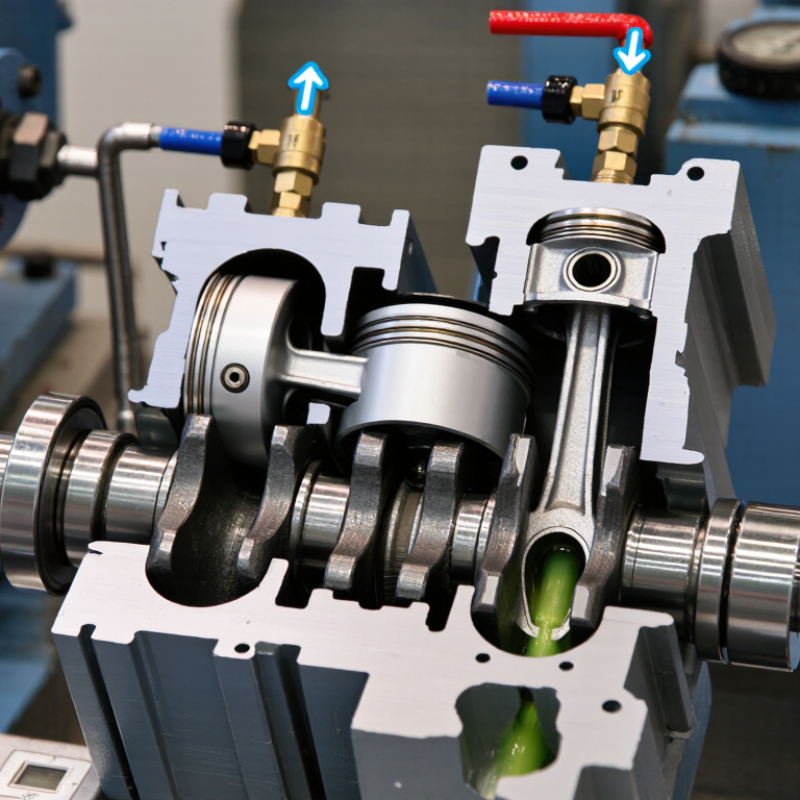
A reciprocating compressor is a positive-displacement machine that increases gas pressure inside a cylinder. It uses a piston, crankshaft, connecting rod, and automatic valves. During the suction stroke, low-pressure gas enters through the inlet valve. The piston then moves backward. The inlet valve closes, trapping the gas inside. As the piston moves forward, the gas volume decreases and its pressure rises. When cylinder pressure exceeds discharge pressure, the outlet valve opens.
It is not a pump.
The primary purpose of a reciprocating compressor is to deliver compressed gas at a controlled pressure. This design serves workshop air systems, refrigeration equipment, process machinery, and gas transfer applications. It works especially well when high pressure matters more than extremely smooth flow. A receiver tank can reduce pressure pulsations. Intercoolers may also lower gas temperature between compression stages.
Maintenance records often show that small details matter. Worn valve plates, damaged piston rings, or poor lubrication can reduce output quickly. Operators should monitor vibration, discharge temperature, oil condition, and unusual sounds. The basic explanation seems simple, but real machines are less tidy. Gas properties, clearance volume, leakage, and operating speed all affect performance. Correct measurements are essential before adjusting or repairing the compressor.
Key Components and Their Functions
A reciprocating compressor moves gas through repeated piston strokes inside a cylinder. Its crankshaft converts motor rotation into back-and-forth motion. The piston then compresses gas before discharge. Simple in principle, but every component must cooperate precisely.
The cylinder provides the compression space and guides the piston. Piston rings limit gas leakage along the cylinder wall. Suction and discharge valves open automatically when pressure changes. The crankcase contains the crankshaft, connecting rods, and bearings. These parts transfer power while controlling vibration. A crosshead, used in some designs, keeps the piston rod aligned. Lubrication reduces friction and carries heat away. Cooling may involve airflow, water, or an intercooler between stages. Pressure gauges help technicians observe operating conditions.
Tips: Check oil level, valve response, and unusual vibration during routine inspections. Listen for metallic knocking. It can signal wear, poor lubrication, or loose components. Keep intake filters clean, because restricted airflow increases operating strain. Always follow measured pressure and temperature limits. No inspection routine is perfect. A small assumption can hide a serious fault, so record readings over time and compare changes carefully. Personally, I would not judge compressor health from noise alone; instruments often reveal problems earlier.
How the Suction Stroke Draws Gas into the Cylinder
A reciprocating compressor moves gas through a repeated piston cycle inside a sealed cylinder. During the suction stroke, the crankshaft pulls the piston downward. Cylinder volume increases, and internal pressure falls below the pressure in the suction pipe.
That pressure difference opens the suction valve. Gas then flows through the valve into the cylinder, often with a faint pulsing sound. The discharge valve stays closed because cylinder pressure remains lower than discharge pressure. Near the bottom dead center, the piston briefly reaches its lowest position. Suction ends when the valve closes and prevents gas from flowing backward.
The process sounds simple.
In practice, timing matters. A worn valve may open late, close poorly, or leak during piston reversal. Even a small leak can reduce capacity and raise discharge temperature. Technicians often compare suction pressure, valve noise, vibration, and cylinder temperature during inspection. A cool suction line does not always prove healthy operation; liquid entering the cylinder can damage components and dilute lubricant. That detail is easy to miss.
Clearance volume also affects the next suction stroke. Gas trapped above the piston expands before fresh gas enters, reducing actual intake. I have found that textbook diagrams hide this limitation. Real compressors respond to valve condition, gas composition, speed, and temperature. Reliable analysis therefore combines pressure readings with physical inspection, rather than trusting one measurement alone.
Common Designs, Applications, and Operating Considerations
A reciprocating compressor uses a piston moving inside a cylinder to raise gas pressure. The crankshaft drives the piston through a connecting rod. As the piston withdraws, suction valves admit gas. As it returns, discharge valves release compressed gas. The crank turns. This design suits high-pressure service and relatively modest flow rates.
Common designs include single-acting and double-acting cylinders. Single-acting units compress gas on one piston side, while double-acting units use both sides for greater capacity. Lubricated compressors reduce wear through oil films, but they may introduce oil into the gas stream. Oil-free designs protect sensitive processes, although their seals and packing often require closer inspection. Diaphragm compressors provide another option when gas purity or leak control is critical.
Applications range from workshop air systems to refrigeration, chemical processing, and gas transmission. Operating conditions deserve careful attention. Pressure ratio, inlet temperature, clearance volume, and valve timing directly affect capacity and efficiency. Intercoolers can lower discharge temperature between stages. Pulsation matters. Pulsation bottles and proper pipe supports help limit vibration and fatigue. Operators should monitor oil pressure, cylinder temperature, vibration, leakage, and unusual valve noise. Maintenance records should connect each reading with a defined limit. That assumption can fail. A compressor that appears efficient on paper may perform poorly with wet gas, frequent starts, or unstable demand. Qualified technicians should verify relief protection, isolation procedures, and manufacturer-independent safety requirements before operation.
What Is a Reciprocating Compressor and How Does It Work?
Representative discharge-pressure ranges for common reciprocating-compressor applications.
A reciprocating compressor uses a piston moving inside a cylinder to draw in, compress, and discharge gas through automatic suction and discharge valves. Actual operating pressure depends on the machine design, gas, number of stages, cooling method, and safety requirements.