231-941-0215 sale@namkeenmachine.com 2707 Aero Park Drive Traverse City, MI
Eng
  • Eng
  • Deu
  • Fra

What Is a Tank Vacuum and How Does It Work?

A tank vacuum is a controlled negative-pressure condition inside a storage tank, vessel, or vacuum tanker. It develops when air or vapor leaves faster than replacement gas enters. The result is pressure below atmospheric pressure. In practical terms, the tank walls experience an inward load, even when the tank appears empty.

This matters during pumping, unloading, cooling, cleaning, and vapor condensation. A tank vacuum system usually includes a vacuum pump, inlet piping, isolation valves, pressure gauges, and a vacuum relief device. The pump removes gas from the tank. The relief device admits air or inert gas when pressure falls too far. Small changes can become serious. A blocked vent, a closed valve, or a rapid temperature drop may deform a thin tank shell.

The American Petroleum Institute addresses tank design and pressure protection through standards such as API 650 and API 2000. API 2000 specifically covers venting requirements for atmospheric and low-pressure storage tanks. OSHA’s Permit-Required Confined Spaces standard, 29 CFR 1910.146, also emphasizes atmospheric testing and controlled entry procedures. These standards show that vacuum control is not merely a pumping issue.

Industry research supports the wider importance of vacuum equipment. Grand View Research reports continued growth in the global industrial vacuum cleaner market, driven by manufacturing, chemical processing, and maintenance applications. However, market figures describe equipment demand, not safe operating limits. That distinction is easy to miss.

The working principle is simple.

Safe application is not.

This guide explains how a tank vacuum forms, how operators measure it, and how relief systems prevent collapse. It also considers practical details, including hissing air, gauge movement, flexible hoses, and the uncomfortable limits of simplified explanations.
What Is a Tank Vacuum and How Does It Work?

What Is a Tank Vacuum?

What Is a Tank Vacuum?

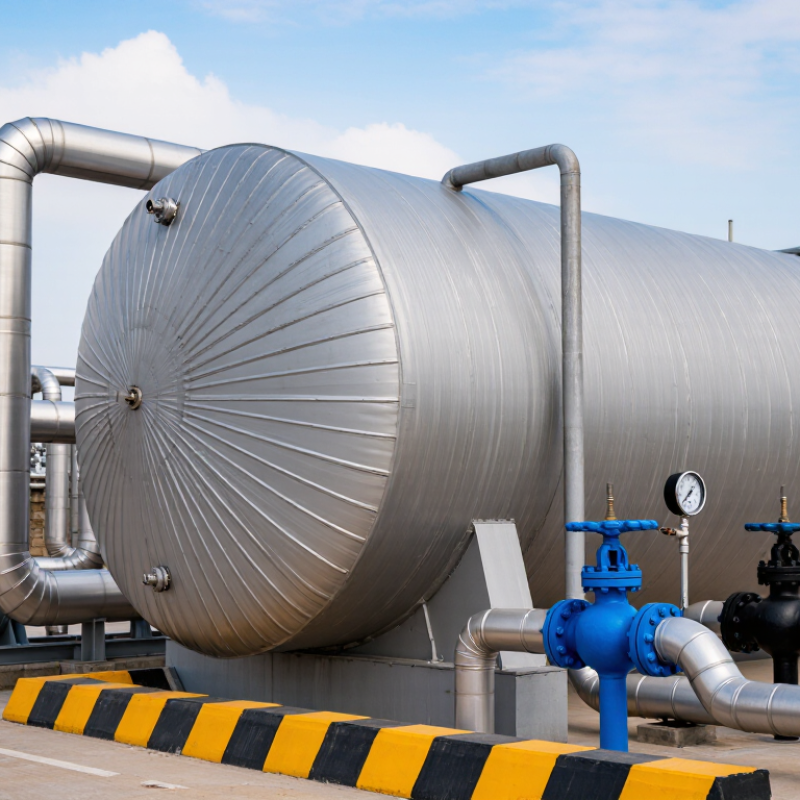
A tank vacuum is a sealed vessel designed to collect, hold, or move liquids, sludge, dust, or other bulk materials under reduced pressure. It is not simply a larger vacuum cleaner. A vacuum pump removes air from the tank, lowering internal pressure. Atmospheric pressure then pushes material through a hose and into the vessel.

For example, a tank operating at -80 kPa gauge pressure contains about 21 kPa of absolute pressure at sea level. That pressure difference drives intake flow. The pump does not directly “pull” the material. This distinction matters when selecting hose diameter, filters, valves, and tank strength. Field operators also check foam, moisture, and sudden pressure changes, because real materials rarely behave like clean water.

Energy use can be overlooked. The U.S. Department of Energy reports that compressed-air leaks may waste 20–30% of compressor output in poorly maintained systems. Ejector-based vacuum equipment can suffer similar inefficiency when seals, hoses, or fittings leak. ASME pressure-vessel guidance also shows why vacuum-rated construction matters; external pressure can collapse a tank even when internal pressure seems modest. The term remains surprisingly loose. Some suppliers use “tank vacuum” for mobile collection equipment, while others mean a fixed vacuum receiver. That ambiguity can cause mistakes. Check the rated vacuum level, capacity, material compatibility, and relief protection before operation.

Main Components of a Tank Vacuum

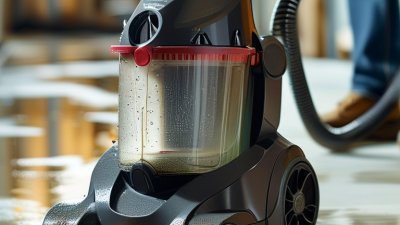
A tank vacuum uses negative pressure to move dust, debris, or liquid through a hose. Its main components determine how safely and efficiently that process works. The tank stores collected material. A sealed lid protects the airflow path. Inside the lid, an electric motor drives a fan, creating suction. The inlet port connects to the hose, while the hose carries material into the tank. Small leaks matter. They reduce suction quickly.

The filtration system is equally important. A cartridge filter handles ordinary dust, while a high-efficiency filter captures finer particles. NIOSH guidance states that HEPA filters remove at least 99.97% of particles measuring 0.3 micrometers. That figure describes test performance, not every real workplace condition. OSHA silica-control guidance also recommends HEPA-filtered vacuums for cleanup instead of dry sweeping. Filter loading can still restrict airflow. Replacement timing needs attention.

For wet pickup, a float shutoff prevents liquid from reaching the motor. It rises as the tank fills and closes the suction opening. This simple part can prevent expensive damage. The power cable, switch, wheels, drain outlet, and tank seals complete the working system. A wide drain saves time after liquid collection. A narrow hose improves access but may clog sooner. I would not judge a tank vacuum by motor power alone. Airflow, filter condition, seal quality, and tank capacity work together. In practice, one overlooked gasket can defeat an otherwise capable machine.

How a Tank Vacuum Creates Suction

What Is a Tank Vacuum and How Does It Work?

A tank vacuum uses a motor, fan, hose, and collection tank to create suction. The motor spins the fan at high speed. This action pushes air away from the tank and lowers its internal pressure. Atmospheric pressure then pushes air, dust, and liquid through the hose.

That pressure difference creates suction. It is not the motor “pulling” debris directly. A narrow nozzle can increase air speed, while a wide hose may move more air. Both details matter. The American Society of Mechanical Engineers identifies pressure, airflow, and system resistance as key factors in fluid movement. For household vacuum cleaners, European Ecodesign rules limit rated input power to 900 watts and set annual energy use below 43.3 kWh under standard conditions. More power alone does not guarantee stronger cleaning.

A tank vacuum also depends on seals, filters, and hose condition. A cracked gasket leaks air before suction reaches the floor. A clogged filter reduces airflow and can heat the motor. I have found that users often judge performance by noise, which is an unreliable shortcut.

Tips: Check both sealed suction and airflow ratings. These measurements are covered by ASTM F558 testing methods. Empty the tank before airflow drops. Inspect the hose for soft bends and hidden blockages. For wet pickup, use only components rated for liquid collection. Small mistakes matter.

Step-by-Step Operation of a Tank Vacuum

What Is a Tank Vacuum and How Does It Work?

Step-by-Step Operation of a Tank Vacuum

A tank vacuum removes liquids, sludge, or dry debris by creating negative pressure inside a sealed collection tank. The vacuum pump lowers the tank’s internal pressure. Outside air then pushes material through the suction hose. This pressure difference does the real work. The pump does not directly “pull” every particle.

The operator inspects the tank, hoses, seals, and relief valve before starting. The suction hose connects firmly to the access point. The inlet valve opens slowly, preventing sudden surges. As the pump runs, material travels into the tank. A separator or filter helps protect the pump from liquid droplets and fine particles. The operator watches the level gauge and listens for unusual sounds. When the tank reaches its safe limit, the pump stops. The hose is isolated before the tank is emptied through its discharge system. A small leak can reduce performance dramatically. It is easy to overlook.

Tips: Keep hose bends wide and gentle. Check seals before every operation. Never exceed the tank’s rated vacuum or fill level. Drain moisture from filters when required. Operators should wear suitable protective equipment and follow the site’s written procedures. Do not rely only on sound; gauges and inspections provide better evidence. In my view, the most useful habit is recording pressure, fill levels, and maintenance findings after each job. That record exposes weak patterns before they become failures.

Common Applications and Safety Considerations

What Is a Tank Vacuum and How Does It Work?

A tank vacuum occurs when pressure inside a vessel falls below atmospheric pressure. The pressure difference pulls air, liquids, or sludge toward the tank. Vacuum equipment removes gases or transfers materials through sealed hoses. Field operators use this principle for liquid recovery, tank cleaning, spill control, and material loading. A vacuum is not automatically safer. The tank wall must withstand the calculated external pressure.

Common applications include removing wastewater, recovering process liquids, and cleaning storage vessels before inspection. Vacuum trucks can collect dense sludge from narrow spaces. In some facilities, fixed vacuum systems support controlled evaporation or filtration. Equipment selection depends on viscosity, temperature, vapor characteristics, and required flow rate. A small mistake here can damage a tank quickly.

Safety controls require more than checking suction strength. OSHA’s permit-required confined-space standard, 29 CFR 1910.146, requires atmospheric evaluation, entry procedures, communication, and rescue planning. NIOSH reported 670 confined-space worker deaths from 1992 to 2005, with would-be rescuers representing a major share of fatalities. That figure still deserves attention. API Standard 2015 also emphasizes isolation, gas testing, ventilation, and documented tank-entry controls. Operators should verify pressure relief paths, inspect hoses, bond equipment where needed, and prevent unexpected inflow. Never enter a tank based only on a normal oxygen reading. Toxic gases can remain present, and oxygen levels can change during pumping. The uncomfortable lesson is simple: a quiet tank may still be dangerous.

What Is a Tank Vacuum and How Does It Work? - Common Applications and Safety Considerations

Data Dimension Description or Typical Value How It Works or Why It Matters
Definition A tank vacuum is a condition in which the pressure inside a tank is lower than the surrounding atmospheric pressure. The pressure difference can help remove air, gases, vapors, or liquids, but it also creates external loads on the tank shell.
Pressure Reference Absolute pressure is measured from a perfect vacuum; gauge vacuum is commonly expressed relative to atmospheric pressure. At sea level, standard atmospheric pressure is approximately 101.3 kPa absolute, or 1.013 bar absolute.
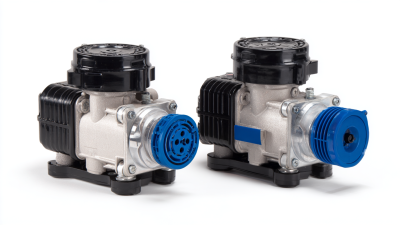
Vacuum Generation Common equipment includes liquid-ring pumps, dry mechanical pumps, rotary vane pumps, ejectors, and vacuum systems integrated with process equipment. The equipment removes gas from the tank until the desired pressure is reached or maintained.
Pressure Control A vacuum regulator, control valve, pressure switch, or automated feedback loop may be used. The control device limits excessive vacuum and helps keep the tank within its design operating range.
Typical Vacuum Level Many industrial tank processes operate at a partial vacuum rather than a near-perfect vacuum; the exact range depends on tank design and process requirements. Storage tanks are often designed for limited vacuum, while specially engineered vessels can withstand substantially lower absolute pressures.
Vacuum Measurement Vacuum gauges, absolute pressure transmitters, differential pressure instruments, and vacuum switches are commonly used. Absolute pressure instruments are useful when process conditions and atmospheric changes must be compared accurately.
Liquid Storage Used for controlled transfer, vapor management, and protection of certain liquids from air exposure. A vacuum can reduce air entry during withdrawal, but the tank must admit replacement gas when required to prevent structural damage.
Vacuum Filtration A vacuum is applied below a filter medium to accelerate liquid removal from solids or filter cake. The pressure difference drives liquid through the filter, improving separation speed compared with gravity filtration.
Vacuum Drying Reduced pressure lowers the boiling temperature of many liquids, allowing moisture or solvents to evaporate at lower temperatures. This can help protect heat-sensitive materials and may reduce thermal degradation.
Vacuum Mixing Mixing under vacuum is used for products where entrained air, foaming, or oxidation must be minimized. Removing air bubbles can improve product uniformity and reduce dissolved or trapped gas.
Evaporation and Concentration Vacuum evaporation concentrates solutions at temperatures below their normal atmospheric boiling points. Lower operating temperatures can benefit heat-sensitive fluids and reduce thermal stress on the product.
Deaeration Vacuum removes dissolved or entrained air from liquids, pastes, coatings, and other process materials. Deaeration can reduce bubbles, voids, oxidation, and filling problems.
Main Structural Hazard Tank collapse, buckling, or permanent deformation caused by external atmospheric pressure. Atmospheric pressure acts inward on the tank when internal pressure falls, especially if the tank is not designed for vacuum service.
Vacuum Relief Device A vacuum relief valve or breather valve admits air or inert gas when the internal pressure becomes too low. Its set pressure must be compatible with the tank's permitted external-pressure rating and process conditions.
Blocked Vent Risk Blocked, frozen, fouled, or undersized vents can prevent pressure equalization. Vent inspection and cleaning are essential during filling, emptying, cooling, and vapor-condensation events.
Implosion and Entry Safety A tank under vacuum must never be entered, opened, or disconnected without confirmed isolation and pressure equalization. Unexpected vacuum, stored energy, toxic vapors, and oxygen-deficient atmospheres can create severe hazards.
Safe Operating Practice Verify the tank's vacuum rating, inspect relief devices, monitor pressure continuously, and follow documented isolation and maintenance procedures. Engineering review is required whenever vacuum conditions, temperature, fluid properties, or operating procedures change.

Note: Actual operating limits, relief-device settings, and inspection intervals must be established from the tank design documentation, applicable codes, and site-specific operating procedures.