- Eng
- Deu
- Fra
Top 10 Tapered Motor Shaft Suppliers Worldwide?
Choosing a reliable motor shaft supplier requires more than comparing catalog prices. A Tapered Motor Shaft must transfer torque smoothly, maintain alignment, and survive repeated starts, stops, and vibration. Small errors can create serious problems. Excessive runout may damage bearings, while poor surface finishing can accelerate wear.
This guide introduces ten notable Tapered Motor Shaft suppliers worldwide. It considers manufacturing experience, material options, machining accuracy, heat treatment, inspection systems, and customization capabilities. Each supplier should be assessed against the actual motor design, load profile, and operating environment. A shaft for a compact pump may require different specifications from one used in industrial automation or heavy-duty equipment.
Key details matter. Check taper dimensions, keyway accuracy, concentricity, hardness, balancing, and corrosion protection. Ask whether the supplier provides dimensional reports and traceable material certificates. Clear drawings and sample approvals can prevent costly production changes later. Delivery consistency and technical support also deserve attention.
No ranking is perfect.
Supplier information can change. Published tolerances may not reflect every production batch, and a low quotation may exclude testing or finishing. This review therefore aims to support careful comparison, not replace engineering validation. Buyers should confirm current capabilities directly, request samples where practical, and test shafts under realistic loads before approving large orders. With a disciplined approach, companies can identify dependable partners and reduce failures linked to poor fit, inaccurate machining, or weak quality control.
Tapered Motor Shafts: Design, Functions, and Common Applications
Top 10 Tapered Motor Shaft Suppliers Worldwide
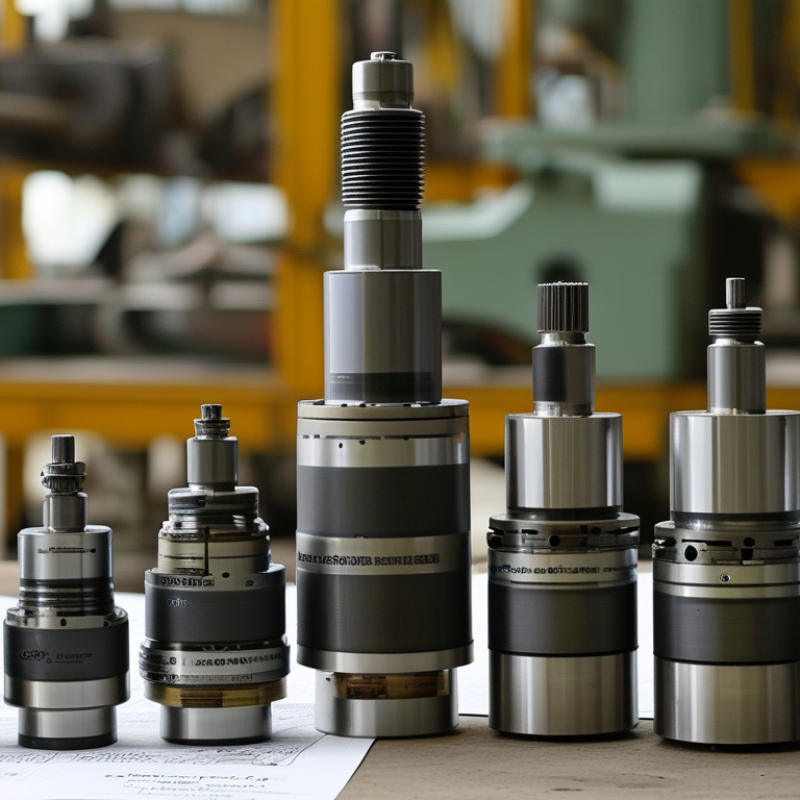
Tapered motor shafts connect rotating power to pulleys, couplings, fans, pumps, and gear assemblies. Their tapered profile creates a firm fit without relying only on a key. The taper angle, shaft diameter, length, and surface finish must match the mating hub precisely. In workshop inspections, I check contact patterns before testing torque. A thin marking compound often reveals uneven engagement within seconds. Small mismatch, big vibration.
The shaft transfers torque while controlling radial movement and helping maintain alignment. Common applications include conveyor drives, agricultural machinery, machine tools, compressors, and industrial ventilation systems. When comparing worldwide suppliers, buyers should request material certificates, dimensional reports, heat-treatment records, and balancing data. Experienced manufacturers usually offer CNC turning, grinding, and controlled inspection procedures. Their technical teams should explain tolerances clearly, not hide behind general claims.
One mistake I have seen is selecting a shaft by diameter alone. It caused poor hub seating and premature wear. The correction required a new mating component, not a simple adjustment. Some designs use stainless steel for corrosion resistance, while others need alloy steel for repeated loading. The right choice depends on torque, speed, environment, mounting method, and service temperature. Supplier reliability also depends on traceability, communication, and realistic delivery commitments. A perfect drawing still fails when production records are incomplete.
Top 10 Tapered Motor Shaft Suppliers Worldwide? - Tapered Motor Shafts: Design, Functions, and Common Applications
Comparative industry profiles based on commonly available tapered-shaft manufacturing capabilities. Specifications are typical engineering ranges and should be confirmed against the final drawing, tolerance class, material standard, and application duty cycle.
| Rank | Supplier Profile | Typical Supply Region | Common Shaft Materials | Typical Taper Designs | Typical Shaft Size | Typical Accuracy | Core Manufacturing Capability | Common Applications |
|---|---|---|---|---|---|---|---|---|
| 1 | Precision motor-shaft specialist | Global industrial markets | AISI 1045; 4140; 42CrMo4 | Custom 1:10 to 1:20; metric drawing-based tapers | 12–80 mm diameter | Runout commonly 0.01–0.03 mm | CNC turning, centerless grinding, dynamic balancing | Servo motors, geared motors, pumps, compact drive systems |
| 2 | High-volume forged-shaft producer | Asia-Pacific and export markets | 1045 carbon steel; 40Cr; 4140 | Straight-sided and conical tapers; keyway-compatible designs | 20–100 mm diameter | General machining tolerance IT7–IT9 | Closed-die forging, CNC machining, induction hardening | Industrial motors, conveyors, fans, agricultural machinery |
| 3 | Electric-motor component manufacturer | Europe and international OEM supply | C45; 42CrMo4; stainless steel grades | Metric custom tapers; Morse-type features where specified | 10–65 mm diameter | Concentricity commonly 0.015–0.04 mm | CNC turning, broaching, grinding, non-destructive inspection | Brake motors, synchronous motors, machine tools, robotics |
| 4 | Stainless and corrosion-resistant shaft supplier | North America and offshore markets | 304; 316; 17-4 PH stainless steel | Custom shallow tapers; keyed, splined, or threaded ends | 8–75 mm diameter | Surface finish commonly Ra 0.8–3.2 µm | Bar turning, heat treatment, passivation, precision grinding | Food-processing equipment, marine drives, chemical pumps, washdown motors |
| 5 | Large-drive and heavy-duty shaft producer | Worldwide power and process industries | 4140; 4340; 34CrNiMo6 | Long conical tapers; interference-fit and shrink-fit designs | 60–250 mm diameter | Runout commonly 0.03–0.08 mm | Forging, rough machining, ultrasonic testing, finish turning | Large pumps, compressors, rolling mills, hoists, crushers |
| 6 | Servo and robotics shaft manufacturer | East Asia and advanced automation markets | Alloy steel; stainless steel; precipitation-hardening steel | Short precision tapers; integrated encoder and coupling seats | 6–45 mm diameter | Runout commonly 0.005–0.02 mm | Swiss-type CNC turning, cylindrical grinding, balancing | Robot joints, servo motors, linear actuators, semiconductor equipment |
| 7 | Pump and rotating-equipment shaft supplier | Middle East, Europe, and global process markets | 4140; 316 stainless steel; duplex stainless steel | Impeller and coupling tapers; keyed or threaded retention | 18–130 mm diameter | Seal-seat finish commonly Ra 0.4–1.6 µm | CNC machining, seal-area grinding, balancing, dimensional inspection | Centrifugal pumps, centrifugal compressors, water-treatment systems |
| 8 | Custom low-volume machining house | North America, Europe, and contract manufacturing hubs | Carbon steel, alloy steel, stainless steel, aluminum | Drawing-specific tapers from approximately 1:5 to 1:30 | 5–180 mm diameter | Typical dimensional tolerance ±0.01–0.05 mm | 5-axis turning, mill-turn machining, prototype inspection | Prototype motors, replacement parts, test rigs, specialty machinery |
| 9 | Automotive and mobility shaft producer | Europe, North America, and Asia-Pacific | C45; 4140; microalloyed steel | Short nose tapers; spline, thread, and flange combinations | 15–70 mm diameter | High-volume production with controlled runout and balance grade | Cold forming, CNC finishing, carburizing, shot peening | Electric traction motors, auxiliary drives, e-pumps, cooling fans |
| 10 | Renewable-energy and generator shaft supplier | Global energy and infrastructure projects | 4140; 4340; 42CrMo4; stainless steel when required | Large coupling tapers; keyed, shrink-fit, and flange-mounted designs | 50–300 mm diameter | Balance and alignment specified by ISO 21940 requirements | Heavy turning, heat treatment, ultrasonic testing, dynamic balancing | Wind generators, hydro generators, large alternators, turbine auxiliaries |
Note: Taper angle, datum diameter, keyway geometry, fit class, hardness, balance grade, and surface finish must be defined on the engineering drawing. Morse and Jacobs tapers are standardized tooling interfaces, while many motor-shaft tapers are application-specific.