Why Choose a Rotary Vacuum Pump for Industrial Applications?
Industrial production often depends on controlled vacuum conditions. Packaging lines, chemical reactors, heat treatment systems, and central vacuum networks all require stable pressure. A rotary vacuum pump can provide this stability with a compact footprint and practical operating flexibility. Its rotating mechanism supports continuous evacuation, even when production runs through long shifts. That matters beside a warm reactor or a packaging machine operating every few seconds.
Energy performance deserves close attention. The International Energy Agency’s Energy Efficiency 2023 report identifies motor-driven systems as a major industrial efficiency opportunity. Vacuum equipment belongs within that discussion. The U.S. Department of Energy’s Industrial Decarbonization Roadmap also emphasizes efficient motors, process optimization, and reduced utility losses. A correctly sized rotary vacuum pump can lower unnecessary runtime and improve system response. However, the pump itself is not the whole system. Leaks, oversized piping, contaminated oil, and poor control settings can erase expected savings.
Maintenance is equally important. ISO 21360-1:2020 provides principles for measuring vacuum-pump performance, helping engineers compare capacity and ultimate pressure more reliably. Operators should check inlet filters, oil condition, exhaust mist, temperature, and actual operating pressure. A pump may appear efficient on paper but struggle beside dust, solvent vapor, or frequent pressure changes. That assumption deserves checking. Dry models may suit clean processes, while oil-sealed designs can offer strong performance for demanding general industrial duties. The best choice depends on process gas, pressure range, duty cycle, maintenance resources, and compliance requirements. In practice, rotary vacuum pump selection is a balance, not a shortcut.

Why Choose a Rotary Vacuum Pump for Industrial Applications?
What Is a Rotary Vacuum Pump?
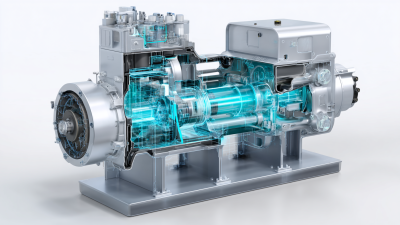
A rotary vacuum pump is a mechanical device that removes gas from a sealed chamber. It uses a rotating rotor inside a housing to create low pressure. As the rotor turns, vanes trap gas, compress it, and discharge it through an outlet. This continuous movement produces stable vacuum performance for many industrial processes.
Rotary pumps are common in packaging, vacuum drying, material handling, and laboratory production. Oil-sealed models can achieve deeper vacuum levels, while dry models reduce oil contamination concerns. In practical use, engineers should check ultimate pressure, pumping speed, gas composition, and operating temperature. Moisture can also affect performance. A pump may appear powerful, yet struggle with wet vapor or heavy dust. No pump is perfect.
Tips: Choose capacity according to the real chamber size, not only the machine rating. Install suitable filters and keep inlet piping short. Check oil condition regularly when using an oil-sealed design. Listen for unusual knocking or uneven rotation. These small signs often appear before serious failure. Record pressure readings during normal operation, then compare them after maintenance. This simple habit improves reliability and supports better technical decisions.
A rotary vacuum pump removes gas by repeatedly changing the volume of a sealed chamber.
Inside, an off-center rotor turns within a cylindrical housing. Sliding vanes follow the housing wall and divide the chamber into smaller pockets. As a pocket passes the inlet, it expands and draws gas from the process vessel. The rotor carries that gas toward the outlet. Its volume then decreases, raising pressure until an exhaust valve releases the gas. Simple mechanics. Precise clearances matter.
In many industrial designs, oil seals the moving surfaces and helps reduce internal leakage. Dry versions use carefully engineered materials instead. Some pumps include a gas ballast, which helps handle vapor before condensation damages the oil.
In plant practice, technicians check inlet pressure, exhaust temperature, vibration, and oil condition during operation. Small leaks matter. A pump may sound normal while its performance gradually declines. Blocked filters, worn vanes, or unsuitable process vapor can increase energy use and reduce achievable vacuum.
This working cycle makes rotary pumps useful for packaging, material handling, drying, and laboratory production equipment. Their steady rotation supports continuous operation, but the pump must match the gas load and required pressure range.
The design looks almost effortless, although maintenance is rarely so neat. An operator may blame the pump when a cracked hose causes the real problem. Careful leak testing, clean connections, and scheduled vane inspection provide more reliable results than pressure readings alone. Even a short shutdown can expose moisture that was overlooked during routine checks.
Rotary vacuum pumps serve industrial processes that need steady, controllable pressure reduction. In packaging plants, they remove air from bags, trays, and sealed containers. This helps limit oxidation and protects product shape. Food processors also use them during freeze-drying, where low pressure supports ice sublimation at controlled temperatures.
Chemical facilities rely on rotary pumps for solvent evaporation, filtration, and vacuum distillation. Their oil-sealed designs can deliver stable performance when systems operate continuously. Dry-running versions suit processes where oil contamination creates quality concerns. Plastic manufacturers use vacuum during extrusion to remove moisture and trapped gases. Metallurgy operations apply it during degassing, casting, and heat treatment. Semiconductor production is another demanding area. SEMI’s World Fab Forecast has projected global semiconductor manufacturing equipment investment above 100 billion dollars in recent annual cycles, supporting demand for dependable vacuum infrastructure.
The market is expanding. Grand View Research estimated the global vacuum pump market at several billion dollars in 2023, with continued growth through 2030. However, capacity alone does not guarantee good results. A pump may struggle with vapor loads, dust, or frequent cycling. It happens. Engineers should measure ultimate pressure, pumping speed, gas composition, and maintenance intervals before selection. In real plants, a correctly sized rotary pump often saves more energy than an oversized unit running far below its useful range. Even so, field conditions can change faster than design assumptions.
Rotary vacuum pumps are valued for their steady performance in demanding industrial applications. Their rotating mechanism removes air continuously, creating reliable vacuum levels for packaging, drying, filtration, and material handling. The design is compact, so it fits beside crowded production equipment. It also starts quickly and delivers consistent suction during repeated cycles. In real plant conditions, this predictability can reduce process interruptions and simplify operator training. That matters.
Another important benefit is flexibility. Rotary pumps can support different vacuum ranges when correctly selected and maintained. Oil-sealed models often provide strong performance, while dry versions may suit cleaner processes. Their relatively simple construction helps technicians inspect vanes, seals, filters, and lubrication points without unusual tools. Regular checks are still essential. Neglected oil can increase friction, heat, and operating costs. Small maintenance details matter.
These pumps can also reduce energy waste when matched with the actual system demand. An oversized pump may consume more power than necessary, while an undersized unit may run continuously. Engineers should examine leakage, pipe length, moisture, and cycle time before choosing a model. Noise and heat should be reviewed too. No pump is perfect. Rotary vacuum technology may require more frequent service in dusty or humid environments, and that limitation deserves honest attention before installation.
| Evaluation Dimension | Typical Industrial Performance | Main Benefit | Suitable Applications |
|---|---|---|---|
| Achievable Vacuum Level | Approximately 10-1 to 10-3 mbar for many rotary vane configurations | Provides stable low-pressure conditions for removing air, moisture, and dissolved gases. | Vacuum packaging, vacuum drying, degassing, freeze-drying support, and laboratory process equipment. |
| Pumping Speed Range | From less than 1 m3/h to several hundred m3/h, depending on pump size and design | Supports both small process tools and medium-to-large industrial systems. | Central vacuum systems, material handling, food processing, and chemical production. |
| Continuous Operation | Designed for continuous duty when correctly sized, ventilated, and maintained | Allows reliable operation in repeated or nonstop production cycles. | Automated production lines, vacuum forming, printing, and industrial conveying. |
| Compact Equipment Footprint | Rotary designs generally combine the motor and pumping mechanism in a compact assembly | Saves floor space and simplifies installation near the process equipment. | Machine tools, packaging machines, medical equipment, and space-limited production areas. |
| Energy Efficiency at Moderate Vacuum | Efficient for many applications operating from atmospheric pressure down to moderate or high vacuum | Can reduce energy consumption compared with oversized or poorly matched vacuum systems. | Pick-and-place handling, vacuum clamping, woodworking, and general automation. |
| Oil-Sealed Pump Performance | Oil-sealed rotary vane pumps provide effective sealing and low ultimate pressure | Offers strong compression performance and good resistance to normal process fluctuations. | Vacuum coating support, refrigeration servicing, vacuum furnaces, and general industrial vacuum. |
| Dry-Running Options | Dry rotary screw, claw, and scroll designs operate without lubricating oil in the pumping chamber | Reduces the risk of oil contamination and eliminates routine oil changes in the pumping chamber. | Food and pharmaceutical processing, electronics manufacturing, clean packaging, and laboratories. |
| Maintenance Requirements | Routine tasks may include filter replacement, leak inspection, and oil or seal maintenance, depending on design | Predictable maintenance helps support planned production uptime. | Facilities with preventive-maintenance programs and standardized service schedules. |
| Noise and Vibration | Modern rotary pumps can provide relatively smooth operation when correctly installed and isolated | Improves operator comfort and reduces disturbance to nearby equipment. | Indoor manufacturing areas, inspection systems, research facilities, and automated work cells. |
| Process Flexibility | Can be used alone or combined with boosters, filters, separators, condensers, and control systems | Allows the vacuum system to be adapted to changing throughput and process requirements. | Multi-stage production lines, customized machinery, and processes with changing vacuum loads. |
| Installation and Control | Available as standalone units, skid-mounted systems, or variable-speed packages | Facilitates integration with automated controls and centralized plant utilities. | Industrial automation, process engineering, and factory-wide vacuum networks. |
| Cost Considerations | Generally offers a broad selection of capacities and configurations | Provides a practical balance between purchase cost, operating performance, and serviceability. | Small workshops, medium-scale manufacturing, and high-volume industrial production. |
Note: Performance ranges are typical engineering values and vary with pump construction, gas composition, inlet pressure, temperature, contamination level, and system configuration.
Choosing a rotary vacuum pump starts with the process, not the catalogue. Define required ultimate pressure, pumping speed, gas composition, moisture, particles, and daily operating hours. A pump may reach the listed pressure yet fail under real process loads. That detail matters. The IEA’s Energy Efficiency 2017 report estimates that motor-driven systems consume about 53% of global electricity. The U.S. Department of Energy also estimates pumping systems represent roughly 27% of industrial electricity use. These figures make efficiency a practical selection criterion, not a marketing extra.
Industries should compare performance at the actual operating pressure. Check power demand, heat rejection, noise, oil compatibility, and tolerance for vapor. Variable-speed control can reduce unnecessary energy use during changing production cycles. ISO 21360-1 provides a recognised method for measuring vacuum-pump performance, helping engineers compare test results more consistently. In practice, selection errors often come from using nominal capacity alone. A small safety margin is useful. An oversized pump can also waste energy.
Maintenance should follow operating conditions. Inspect inlet filters weekly in dusty areas, check oil condition, and record pressure, temperature, vibration, and running hours. Examine exhaust mist and shaft seals before contamination reaches nearby equipment. Leak testing should be routine, because a tiny flange leak can keep the pump running continuously. DOE pump-system guidance recommends correcting leakage, throttling, and poor system matching. No maintenance schedule is perfect. Review it after every process change, because yesterday’s clean gas load may become tomorrow’s failure.