How to Choose the Right Liquid Pump for Your Needs?
Choosing the right liquid pump starts with the fluid, not the catalog. Water, oil, chemicals, and food products behave differently inside a pump. Viscosity, temperature, solids, and corrosiveness can change which design performs safely and reliably. Even a clear-looking liquid may contain abrasive particles. Small details matter.
The U.S. Department of Energy’s Improving Pumping System Performance: A Sourcebook for Industry (2006) reports that pumping systems use nearly 20% of global electricity, with some industrial facilities using 25–50% of their energy for pumping. These broad estimates are not a prediction for every site. They do show why pump selection and system design deserve careful attention. An oversized pump can waste energy. A poorly matched seal may fail early.
Before comparing models, define the required flow rate, total head, operating hours, and installation conditions. Check the fluid’s properties and whether flow demand changes during the day. Then compare pump types, materials, efficiency curves, maintenance access, and lifecycle costs—not just purchase prices. Ask suppliers to confirm performance at your actual duty point. A quoted maximum flow alone can mislead.
There is no perfect choice. Real operating data may be incomplete, and assumptions should be revisited after installation. This guide explains the key factors to weigh so you can choose a liquid pump that fits the application, rather than forcing the application to fit the pump.
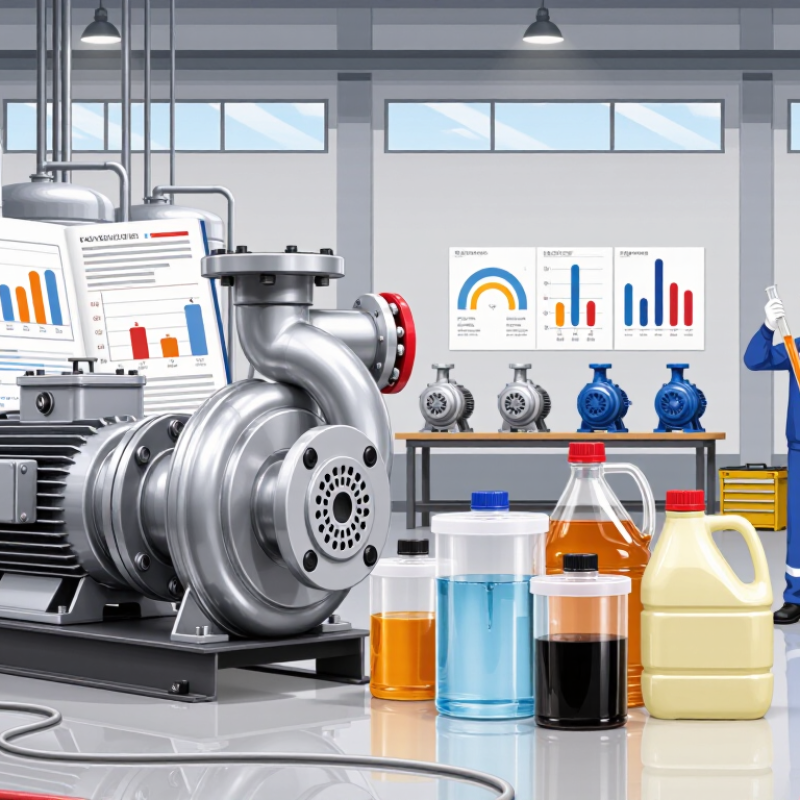
Define the Liquid, Flow Rate, and Operating Conditions
Choosing a liquid pump starts with a precise description of the fluid. “Water-like” is not enough. Record its viscosity, temperature, density, and any solids or bubbles it carries. A thin solvent behaves differently from cold syrup. Check chemical compatibility with every wetted part, including seals and hoses. Small details matter.
Next, define the required flow rate at the point of use, not just the pump outlet. Note how much liquid must move and how quickly. Include pipe length, diameter, bends, elevation changes, and any filters or valves; these add resistance. It is tempting to size a pump from nominal flow alone, but that shortcut can miss real operating losses. If flow varies, specify both the normal rate and the peak demand.
Operating conditions shape the final choice. Record inlet pressure, discharge pressure, suction lift, temperature range, and whether the pump runs continuously or in short cycles. Consider whether it must handle dry starts or frequent stops. Even careful estimates can be off, so compare calculations with measurements from the actual system where possible. My first estimate would not be the final choice. A small test under realistic conditions can reveal vibration, overheating, or unstable flow before installation.
Compare Pump Types and Their Operating Principles
Choosing a liquid pump starts with how it moves fluid, not just its advertised flow rate. A centrifugal pump spins an impeller, adding velocity that the casing converts into pressure. It suits steady transfer of relatively thin liquids, such as water in a clean process line. Flow can fall as discharge pressure rises. Check the pump curve against actual operating conditions.
Positive-displacement pumps capture a set volume and push it onward each cycle. Gear pumps handle many viscous fluids, while diaphragm pumps use a moving membrane and valves to transfer liquid. They can provide consistent flow as pressure changes, but pressure relief is important. Their flow may pulse. Not ideal for every liquid.
Peristaltic pumps squeeze flexible tubing with rollers, moving liquid through the tube rather than the pump mechanism. This can help with abrasive or contamination-sensitive fluids, though tubing wears and needs inspection. Compare viscosity, temperature, solids, required flow, pressure, and cleaning needs. A pump can meet its flow target and still perform poorly if suction conditions are overlooked. Selection charts can oversimplify this; real fluid behavior is sometimes messier than a data sheet suggests.
How to Choose the Right Liquid Pump
Compare common pump types by their operating principles.
This chart counts four common examples: one dynamic pump (centrifugal) and three positive-displacement pumps (gear, diaphragm, and peristaltic). It shows classification, not market share or performance. Centrifugal pumps use an impeller to impart velocity to liquid; positive-displacement pumps move liquid by trapping and displacing a volume. Choose based on required flow and pressure, liquid viscosity, solids content, and material compatibility.
Match Pump Capacity, Pressure, and Head to the Application
How to Choose the Right Liquid Pump for Your Needs?
Start with the flow rate your process actually requires, measured in litres per minute or gallons per minute. A pump rated for higher capacity is not automatically better; excess flow can waste energy or disrupt a process. Next, calculate the total head: the vertical lift plus losses from pipe length, bends, valves, and filters. For example, a pump lifting water six metres through a long, narrow pipe must overcome more than six metres of head. Check the pump curve to confirm it can deliver your target flow at that operating point. Maximum flow and maximum head are usually not available at the same time.
Tips: Include pressure requirements, fluid temperature, and viscosity in your selection. A thicker liquid may reduce flow, while a restrictive filter can raise system losses. Leave a practical allowance, but avoid oversizing by guesswork. It is easy to overlook a small valve or a future pipe extension; revisit those assumptions before ordering.
Also consider duty cycle, available power, and materials that contact the liquid. Continuous operation can require a different configuration from occasional transfer. If the application needs a specific outlet pressure, convert that requirement into head for the liquid being pumped, then account for elevation and friction losses. Water calculations may not transfer neatly to a denser or more viscous fluid. A datasheet helps, but it cannot replace checking actual system conditions. When the figures are uncertain, measure flow and pressure at the installation, or ask a qualified pump professional to review the operating point. My estimate might still miss a changing filter condition. That is worth checking.
Check Installation Requirements, Maintenance, and Total Cost
A pump that fits on paper may not fit the installation. Check the available footprint, pipe diameter, power supply, and access for future servicing. Measure the space around the unit, too; a pump squeezed against a wall can make seal inspection awkward. Small details matter. Confirm that the pump’s materials suit the liquid, including its temperature and any suspended particles. If the flow rate varies, compare performance at your normal operating range rather than relying only on the maximum rating.
Tips: Ask the supplier for installation drawings and a maintenance schedule before purchase. Check how often seals, filters, or bearings need attention, and whether replacement parts are readily available. Keep a little room for service access. It sounds obvious, but it is easy to overlook.
Compare total cost, not just the purchase price. Include installation labor, energy use, routine parts, and likely downtime over the expected service life. A lower-priced pump may consume more power or require frequent attention; a more efficient model may take time to repay its higher initial cost. Estimate using your actual hours of operation, then revisit the assumptions. They will not be perfect. A short trial or a review of similar equipment can help, but real conditions may still differ from the estimate.